Bitcoin Tokenisation coordinates on-chain and off-chain systems through explicit object states, cryptographic evidence, role-based authority and modular integrations.
A project cannot be funded before it is structured. An instrument cannot transfer while locked. A reserve cannot be deployed while encumbered. A liquidity window cannot open without approved policy.
| Object | Key fields |
|---|---|
| Participant | ID, eligibility, jurisdiction, account/wallet reference, restrictions. |
| Project | Asset type, sponsor, verification status, SPV, risk score, milestones. |
| Instrument | Class, authorised supply, rights-schedule hash, restrictions, state. |
| Reserve bucket | Asset type, custody reference, classification, amount, commitments, restrictions. |
| Transaction | Parties, instrument, quantity, payment proof, compliance result, settlement state. |
| Governance action | Proposal, evidence, approval threshold, signer list and execution record. |
Rights schedules, agreements, reports and certificates can be cryptographically fingerprinted.
Timestamps, signer identity and reference records document who approved a state change and when.
Evidence roots can prove inclusion without publishing confidential source documents.

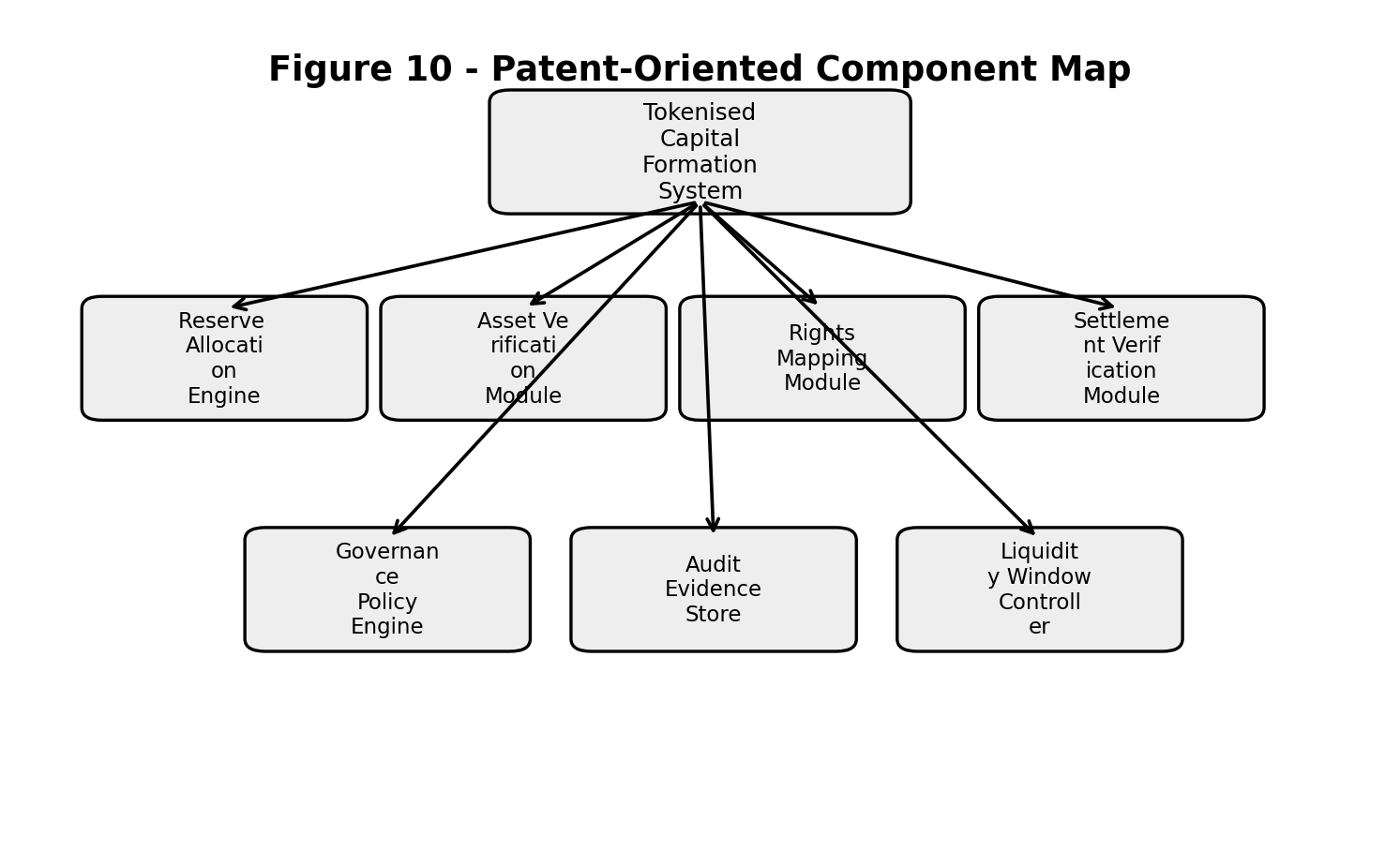
The white paper identifies candidate components such as the reserve allocation engine, rights-mapping module, tokenised SPV lifecycle manager, liquidity-window controller, audit evidence store and governance policy engine. Patentability remains subject to prior-art and counsel review.