Protocol PlatformTokenisation EngineReserve TreasuryReal-World AssetsLiquidity & SettlementTechnologyInstitutionsInvestorsResourcesAboutRequest access
Digital reserve treasury

Bitcoin ecosystem reserves with treasury discipline.

A reserve is more than a wallet. It is a governed state of balances, permissions, classifications, conversion rules, commitments and audit obligations.

Reserve buckets

Capital capacity with explicit purpose.

Reserve assets can be segregated into allocation, liquidity, governance and stabilisation functions so one balance is not counted twice or deployed without policy.

AvailableCommittedEncumberedConvertedDeployedRestrictedReleased
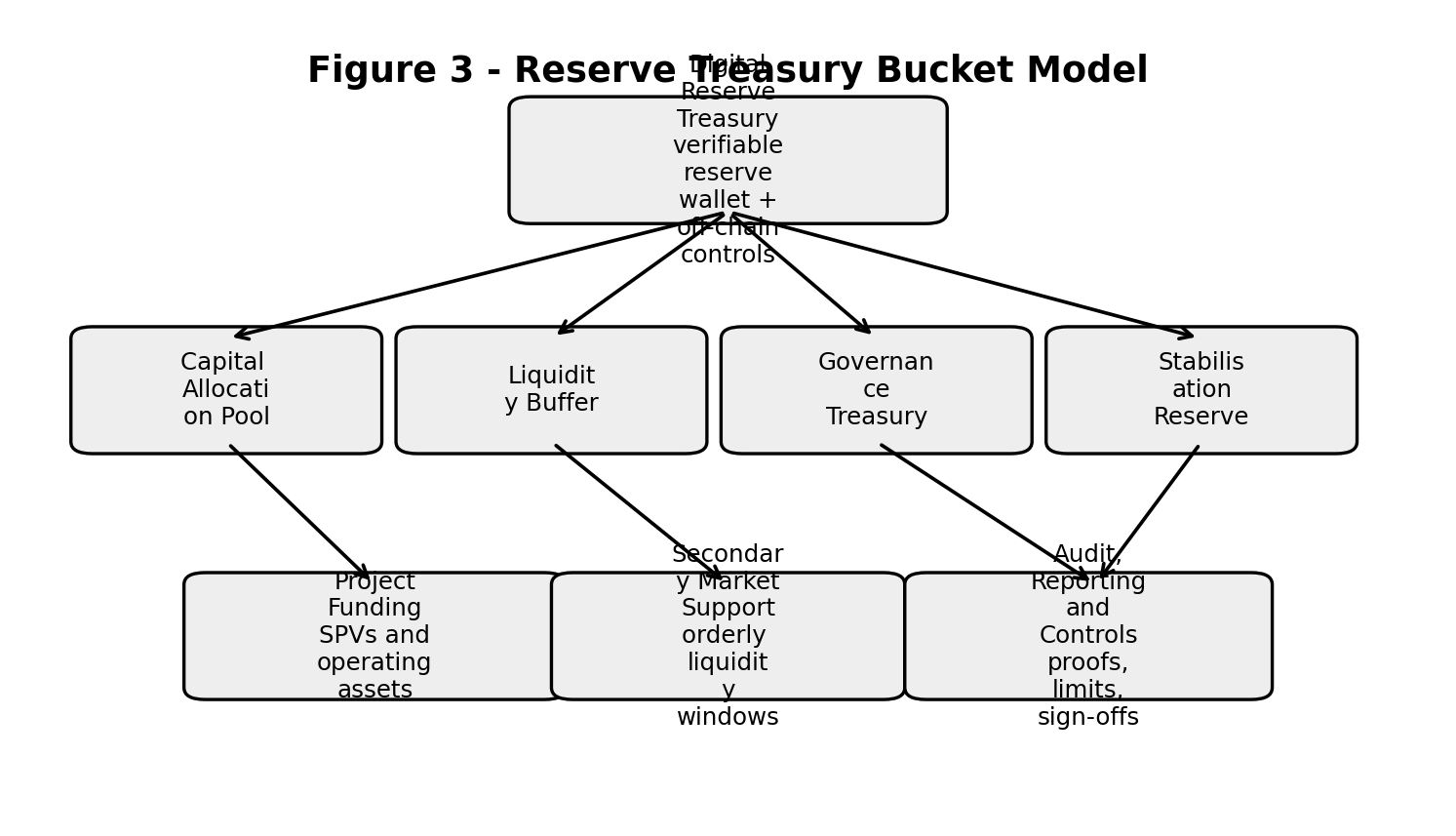
Reserve treasury bucket model
Reserve Treasury bucket model from the protocol paper.
Four functions

Reserve capacity, applied deliberately.

Capital allocation

Fund approved projects.

Convert or allocate Bitcoin ecosystem reserve assets under project-specific limits and approval thresholds.

Liquidity support

Back governed windows.

Provide finite liquidity capacity without making unsupported open-ended redemption promises.

Settlement assurance

Match delivery to finality.

Reserve receipt, conversion or fiat settlement can become a validation input for registry issuance.

Governance funding

Fund audits and operations.

Define budget policy for compliance, administration, software and ecosystem operations.

Controls

Protect the treasury from opacity and double counting.

Segregated custody

Cold storage, institutional custody, operational wallets and exchange accounts receive separate limits and reconciliation.

Multi-signature policy

No single actor should control full reserve movement, project approval and registry execution.

Proof procedures

Reserve reports can combine signed wallet messages, custody attestations, liabilities and reserve classifications.

Make reserve capacity auditable before it is deployable.

Start a conversation