Risk engine
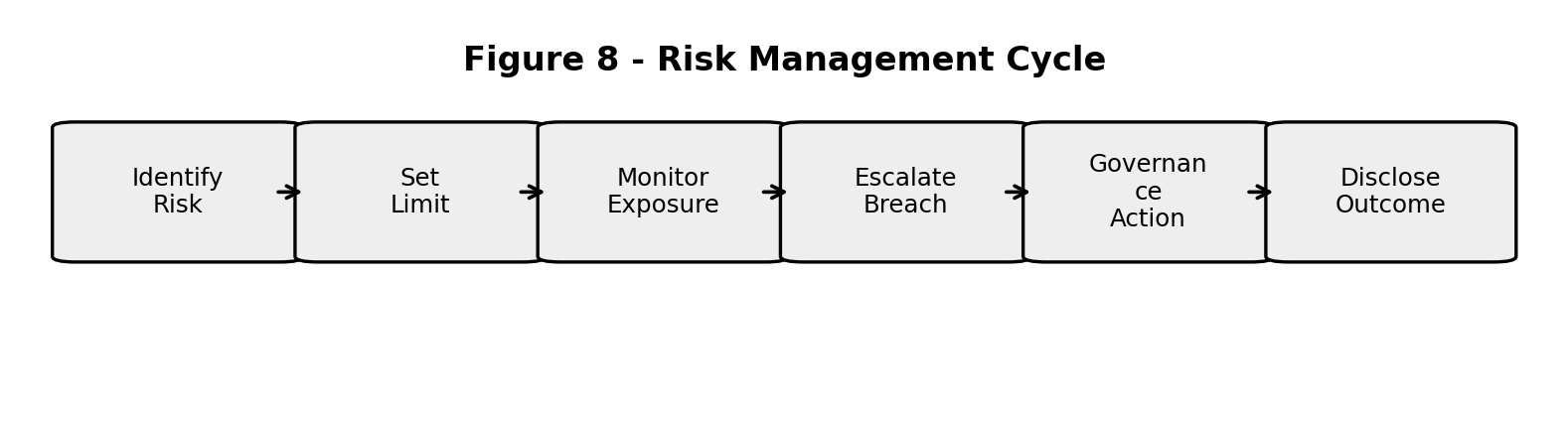
Gate first. Monitor continuously. Escalate by policy.
Legal, market, liquidity, operational, technology, custody, valuation, project, governance and reputation risks are treated as operating inputs—not an appendix.
The architecture is designed to operate with jurisdiction-specific investor onboarding, securities rules, custody requirements, transfer restrictions, market infrastructure and privacy controls.
| Domain | System requirement |
|---|---|
| Investor onboarding | KYC, AML, sanctions, accreditation or suitability status before allocation where applicable. |
| Offering controls | Instrument classification, eligible jurisdictions and marketing boundaries documented per implementation. |
| Transfer restrictions | Whitelist, lock-up, jurisdiction, concentration and investor category checks. |
| Custody & exchange | Approved or regulated venues and documented reconciliation where legally required. |
| Privacy | Separate public proof from confidential personal and legal files. |
| Reporting | Financial, reserve, risk and material-event disclosure according to the relevant structure. |
Legal, market, liquidity, operational, technology, custody, valuation, project, governance and reputation risks are treated as operating inputs—not an appendix.
No single individual should control the full reserve, approve the project, change the registry and release capital.
Transfer rules, integrations and smart contracts should be audited with complexity kept proportionate to the function.
Wallet, bank, custodian, reserve, obligation and registry balances are compared and exceptions escalated.